Wednesday, September 16, 2015

7. Parque Nacional La Campana

Note: I wrote this before the earthquake. We're fine, it looks like everything is OK in Valparaíso.

So, I’ve been planning my first excursion from the Greater Valparaíso region for some time now. My predictions of mountains and picnics in a previous blog post were previously dashed by rain – as I’ve related here, what would be just enough to get the grass damp in Houston is enough to cause a flood on the steep inclines in this part of the world, so our expedition crew decided to play it safe.

           Chile takes its nature reserves seriously – there are 140,000 km2 of protected areas in the country, totaling about a fifth of Chile’s entire territory. And, being an environmental engineer, I am always looking to get out into nature. The excursion was planned for La Campana National Park – a famous reserve depicted on the back of the 5.000 peso bill, and conveniently located just a couple hours from Valparaíso. There are many trails through the park, including one going straight to the top of its highest “hill” (it would be a mountain in any other country, except maybe Nepal). If you make it to the top, they say, you can look back West and see the Pacific Ocean, and look East to see the snow-covered Andes peaks.

            The hike there and back is about eight hours, and the park is only open from 9:00am to 5:30pm, so we got up nice and early to meet our friends in town. We gathered in one of Valparaíso’s main plazas as the last of Friday night’s parties were turning their patrons out, the streets much chillier than normal in the last few minutes before the sun rose. We took a bus from Valparaíso to Quilpué, then from Quilpué to Limache, then from Limache straight to La Campana. Well, it let us off about a half mile away from the park gates, but it’s absolutely blown my mind how well you can get around without a car here. We came for a hike anyway.

           Once we got to the gate, the ranger in charge gave us an option of trails and some details. I wanted to go straight to the top, but my companions were intimidated by the ranger’s description of the 2000-meter ascent, and his warnings that we would need to rest adequately and have brought appropriate food. I was outvoted, and besides, there was a waterfall at the trailhead of the lower path. Could be worse, surely!
            The hike was very long, and despite reaching only half the height of the park’s tallest point, was steep and hard enough. We walked about four hours in the morning, and passed almost no one on the trail – I don’t think I’ve ever been in a park that was so empty. When we did come across other hikers, our “hola”s were met with “guten Tag”s, and our “hello”s met with “bonjour”s.

            Finally, we found this spot:


and decided to stop for lunch.

Having taken the time to sit down and eat, we realized we were pretty tired.

We didn’t make it to the waterfall, this time. After our siesta, it was almost time to head back to the gate – and just as we came to this conclusion, another passing hiker was able to tell us it was actually another seven kilometers from where we were, more than double the distance.
            We also didn’t stand on the top of the mountain with one eye on the Pacific and the other on the Andes; but we did see both from a slightly more manageable but still respectable height of 1000 meters.


It was a magical day. And I slept very, very well that night.

Next time: Independence Day in Chile
Previously: Purple photosythentic bacteria


Sunday, September 13, 2015

6. Purple Bacteria

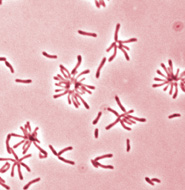
Since recovering from my illness (thanks, Mr Penicillin!) I’ve been working in the lab. Growing bacteria in a bottle is a lot more fun than in the tonsils. They are beautiful.
            These are the “purple” bacteria we’re growing for hydrogen production, after six
Aren't they beautiful?
days of growth. Purple bacteria are a group of organisms that photosynthesize using an entirely different set of molecular machinery than that found in plants or algae. The proteins they use to harness light for energy absorb at different wavelengths, which is what causes them to appear purple or red instead of green. This trait has proven so useful that the genes coding for these processes seem to have been transferred horizontally into a number of unrelated organisms, creating the extremely diverse group of bacteria lumped together by this shared trait.
            These bacteria possess an extremely diverse array of characteristics. Almost all (of those studied, anyway) are able to live aerobically or anaerobically; they can also grow via any of the four major metabolic routes (chemoheterotrophy [chemicals as energy and carbon source, like animals], photoautotrophy [light for energy and CO2 for carbon, like plants], chemoautotrophy, or photoheterotrophy [only bacteria do these]). They are found in all kinds of environments: wastewater sludges, salt- or freshwater sediments, soil, etc. And, as far as I can tell, they do not cause any diseases in humans or other animals. So I caught my bacterial sickness from another source.
            My project involves testing the efficacy of these bacteria as a secondary treatment stage in the fermentation of wastewater. The wastes are first put into a normal (“dark”) fermentation digester, where anaerobic bacteria break them down into gasses (in this case, energy-rich hydrogen and waste CO2), water, and simple organic molecules like acetic acid and butyric acid. These organic molecules still contain lots of energy, but the bacteria in the dark fermenter cannot break them down any further.
 
Reactors, just after inoculation. Nice, fresh sludge.
          
The effluent of the dark fermenter, therefore, is treated further in a photo-fermentation reactor using purple bacteria. Their diverse metabolisms can break the remaining small molecules down, leaving nothing but hydrogen, CO2, and biomass. They do not produce hydrogen from the initial substrates as efficiently as other bacteria, so are used only to finish the conversion; but, their ability to survive under so many conditions means they can be left in the dark fermenter broth. They can live there on the sidelines while the dark fermenters produce lots of hydrogen, and then take over to convert the residues once the lights are turned on.

            We’re working here with a whole diverse group of purple bacteria instead of single-strain monocultures – this is a little trickier than working with a single species, but is expected to yield better results on real wastewater mixes. Lots of different bacteria mean they can metabolize lots of different contaminants in the waste, leading to cleaner water and hopefully more hydrogen. This is something that hasn’t been done very much yet with purple bacteria, which is also a good thing – moving the technology a little closer to practical application!

Starting to grow!

Next time: Hiking trip (for real).

Previously: MAGIC

Wednesday, September 2, 2015

5. MAGIC

First off, I feel I need to apologize for the interruption in my normal posting pattern. I’ve been sick.

Either Yandee or I have been sick most of the time we’ve been here – new country, close quarters with two roommates, and of course the sudden switch from hot to cold are all likely contributors to a near constant flow of the collective nose. I woke up last Sunday with a tickle in my throat, and after a small disapproving meditation, moved my mind to other things, sure I would be fine by the next day.

I wasn’t. But I went to class anyway, not about to let a virus destroy my attendance record on the second week of school. I had planned to go to the lab afterward, but my supervisor took one look at my face and sent me home. I promised I’d be back the next day.

I spent Tuesday on the phone with my dad, who is a doctor, asking for any advice or recommendations for cures I could get over the counter. And Wednesday, Yandee had to take me to the hospital, where through the magic of modern medicine I was set back on the happy, productive path to health!

It’s really hard to be sick in a foreign country. Spending hours in a waiting room is bad enough when you know what to expect (and can understand the language – combating the infection had caused a Copper Curtain to shut in my brain, partitioning away all the Spanish), but there was no way around it. We had thought that antibiotics might be available over the counter here, like they are in Mexico, but fortunately (and unfortunately) they are not. Antibiotics are great when you need them, but it’s incredibly important that they be used exactly according to doctor’s instructions – otherwise, the infecting bacteria can build up a resistance, putting the patient in much greater danger and eventually making drug-resistant strains that can get into the population and put public health back a hundred years. This sounds a little melodramatic, but it’s a serious concern we face and that I consider often as a student of microbiology, with MRSA infections becoming common in the United States and really scary bacteria developing in countries with more lax antibiotic regulations, such as reports of Totally Drug-Resistent tuberculosis coming out of India. So it would have been nice to just walk to the drug store and start zapping the alien invaders, but I would’ve been a little more nervous the rest of my year here!

In the end, the ER in Valparaíso was very much the same as in the US – I wasn’t actively bleeding or otherwise dying rapidly, so I had to wait a while, but eventually I saw the doctor and from there got a penicillin injection in about 20 minutes. Apart from being a magical, specific killer of bacterial cells among all the cells in my person, this penicillin was modified so that it could stay in my bloodstream for three weeks – meaning I didn’t need any further injections or pills to confuse with all my other painkillers and decongestants. How cool is that??

But man, what I would've given for some Blue Box mac'n'cheese.


I will forego the pictures today, because they’re all gross. Next time I plan, and hope, to have some beautiful things to show you!

Next time: Picnics, mountains, bacteria (the good kind)

Previously: Earthquake

Monday, August 17, 2015

4. Earthquake

I recall having a great deal of confidence in my Spanish skills before I left Houston for Valparaíso. I was able to communicate just fine with Yandee’s family, only getting stuck when the conversation wandered into something technical or otherwise complicated.
            I knew, however, that it would be a different thing in Chile, having to rely entirely on Spanish instead of being able to use that one word or phrase in English that I couldn’t translate but the others in the conversation would likely recognize. What I didn’t count on was how different Chilean Spanish was from the Mexican or even Castilian Spanish to which I had mostly been exposed.
            In the breakroom at school I was having lunch with some of the other students, and they asked me why I had chosen to come to Chile. I told them, among other things, to improve my Spanish – and the whole table erupted in laughter. “But we speak the worst Spanish,” one woman told me. “We don’t pronounce all the sounds, we use a lot of words that no-one else does, and we talk so fast.” Now, at this point I was rather acutely aware of these differences in the dialects. But I was surprised to hear them say that they speak Spanish “poorly.” I’ve heard it several times now, and it only gets weirder the more I hear it. Can you imagine going to New Orleans and hearing people apologize for speaking poor English?? Not everyone claims that their English is the best, but most of us are proud of our accents.
            Now, my linguistic training is not so weak that I will succumb to prescriptivism even when encouraged by the natives… but it is really hard for me to understand the Chileans. Imagine you took English classes from a Briton, had a long-term girlfriend from Kansas, and then, for an immersion experience, you decided to go to Scotland. After three weeks, I can understand pretty much everything when I’m spoken to directly, but I get lost really easily if there’s a lot of noise, or if there’s a larger conversation. Which makes it a little difficult to meet people, because I wind up smiling and nodding like the worst kind of pretender. However, it makes it easy to pick out foreigners – they’re the ones I can understand without work! I’ve made friends with the Mexicans and the Spaniards, and they help me out with the slang and sift out some of my Tex-Mex.
            I think this is the point where I regret everything and want to go home. Only I don’t. Even when I have to stop and think of the word, even when I conjugate something wrong, even when I messed up and said wine in the US is full of condoms (I wanted to say “preservatives”), I love speaking this language every day and getting just a little bit better at it, I love going through my flash cards and reading in Spanish, and I love living in this city of crazy houses and poets.
I do, however, feel like I should call all my international friends up and apologize for talking so fast all the time.

In conclusion, it’s not been easy…


… but boy, is it worth it.

By the way, there was a terrible earthquake here and we’ve all been without power for six days. Just kidding. But last week we were trying to eat dinner and the table started shaking – I thought it was people dancing upstairs, but nope – tremor. Nothing crazy happened, but it was a noteworthy experience for the boy from hurricane country.


Next time: No predictions (just in case).

Previously: 

Sunday, August 9, 2015

3. There are no hurricanes in Chile, but…

While I was researching Chile in the lead-up to my year here, one of the most attractive things for me was that there are NO HURRICANES in this country. As someone who has lived most of his life on the US Third Coast, I’ve spent more than my fair share of time watching the Weather Channel like it was tracking Lord Voldemort, stocking up bottled water, and trying to decide whether I should literally head for the hills.
            Unlike the Gulf of Mexico, however, conditions here are non-conducive to hurricane formation. The movement of tropical weather systems is usually strongly skewed from the East to the West, and Chile is on the eastern edge of the Pacific Ocean; hurricanes require warm water, and the oceans in the southern hemisphere are in general colder than in the northern hemisphere (especially the shallow Gulf of Mexico), because there’s a lot more water to heat down here; and the atmospheric winds are much stronger in the southern hemisphere, because there is less land to drag against them, which tends to blow storm systems apart. Also, while water in the toilets does not actually spin clockwise in the southern hemisphere due to the Coriolis effect, tropical cyclones, when they are able to form, DO spin clockwise. This doesn’t have anything to do with why Chile doesn’t get hurricanes, but it makes an eye-catching picture for someone who has seen a thousand counter-clockwise satellite images:


Anyway, while Australia and New Zealand occasionally have to look out for hurricanes and even Brazil seems to have got one once, Chile seems to have never recorded a hurricane landing. I would mention this to people who were worried about me leaving Houston to live in South America for a year to take some edge off their fears, but the response was always the same: “Sure, no hurricanes, but they have earthquakes. You can’t predict an earthquake.”
            I began writing this post in my head a while ago, ready to tell the story of living through a temblor in Chile. What has happened instead is we got something that looks an awful lot like a hurricane.
            It’s the rainy time of year in this part of Chile, and apparently it has been quite a dry one. The news on Monday was predicting a rainy week, and I thought oh, great, maybe that’ll help with the drought. It was mostly cloudy and misty on Tuesday, but on Thursday it began what I would call a light drizzle. I had just gotten to school when the postdoc who has been helping me with research called, telling me not to leave home and if I had, to go back as soon as possible, because very hard rains were expected and I might end up stranded if the streets flooded and the buses couldn’t run. It didn’t look that bad to me; in fact, I didn’t even take any pictures because it looked so benign. I decided, however, that as a foreigner I might be ahead to take the natives’ advice, and that my productivity might actually be improved if I could read about my bacteria in bed or on the sofa instead of a cold, empty meeting room.

           The forecasters were predicting about 2-4 inches of rain on Thursday, and it had rained about an inch already (over something like 12 hours) when I took the bus home. Having lived in Houston, where it is fairly normal to get an inch in an hour, I couldn’t believe what I was seeing. The streets were already beginning to flood in the middle of town, and once the bus began climbing up the hill to my apartment, it was like driving through a river. The whole road was covered in water cascading down to the ocean, and the bus’s tires pushing through it cast water up seven or eight feet into the air, drenching anyone waiting at the stops or trying to walk.

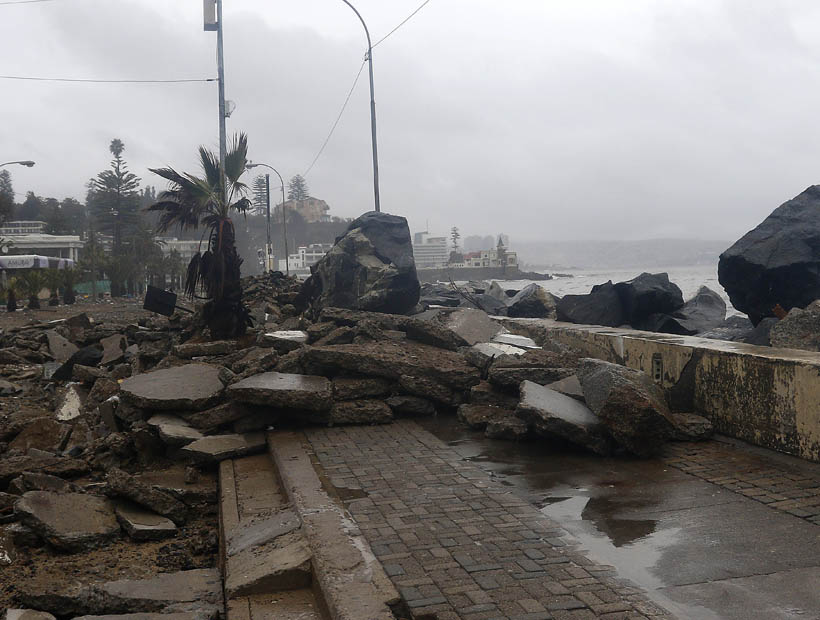
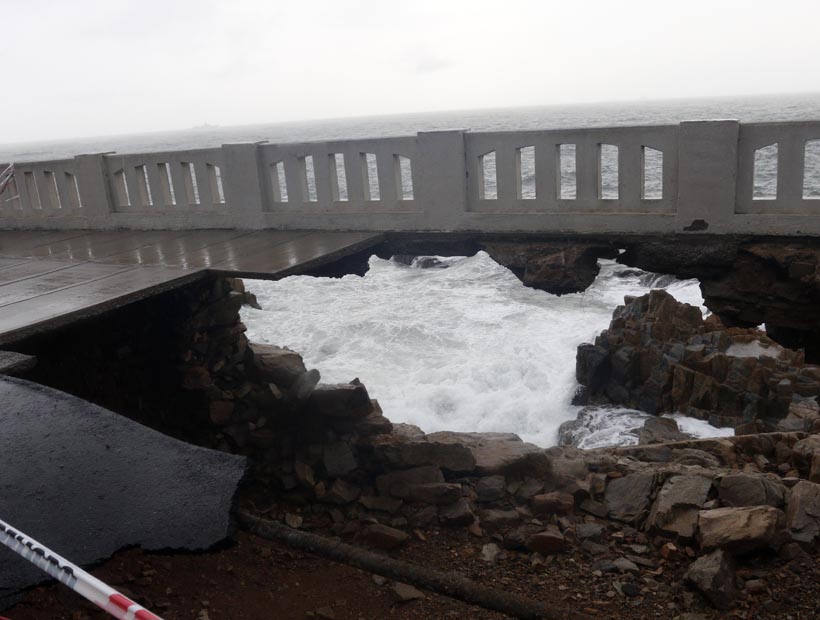
            Things were clearer on Friday, but Saturday we woke up with no power or water in the apartment. The storms had come in that night with such strong winds that the electrical grid for the entire region had been badly damaged, and the floods in the valley and landslides and fallen trees on the hills were making everything hard to repair. We were totally fine on top of our hill, I should stress, but there was an awful lot of damage in neighboring Viña del Mar, lots of flooded homes and washed-out roads. It continued to rain “a little” and flood a lot most of the day, but the power was eventually restored to our apartment around 6:00pm. It just goes to show that everything is relative: what would be a
little storm in Houston was enough to shut down Valparaíso most of the day. And it makes me wonder, having lived through the heaviest rain in Houston in fifty years and the floods in Chile in the same summer, if someone might be interested in paying me to spend some time in California!

Needless to say, Yandee and I did not make it to the beach this week. I have, however, learned a lot about purple photosynthetic bacteria. We will be using them to produce hydrogen gas, which is in a lot of ways even cooler than biodiesel, because it doesn’t require as much processing to purify, and it does not use carbon at all; the carbon from the wastewater feedstock is all locked into the bacteria’s biomass, making this process potentially carbon negative instead of carbon neutral. Hydrogen also burns much cleaner than any carbon fuel - if we could produce enough to power our cars, there would be no carbon monoxide produced as exhaust, no soot, only water vapor. But that kind of discussion is getting a little too far ahead – first we have to find out if we can get more energy out of the bacteria in the form of hydrogen than we put into them.


Next time: Earthquakes, who knows??

Previously: First week of school